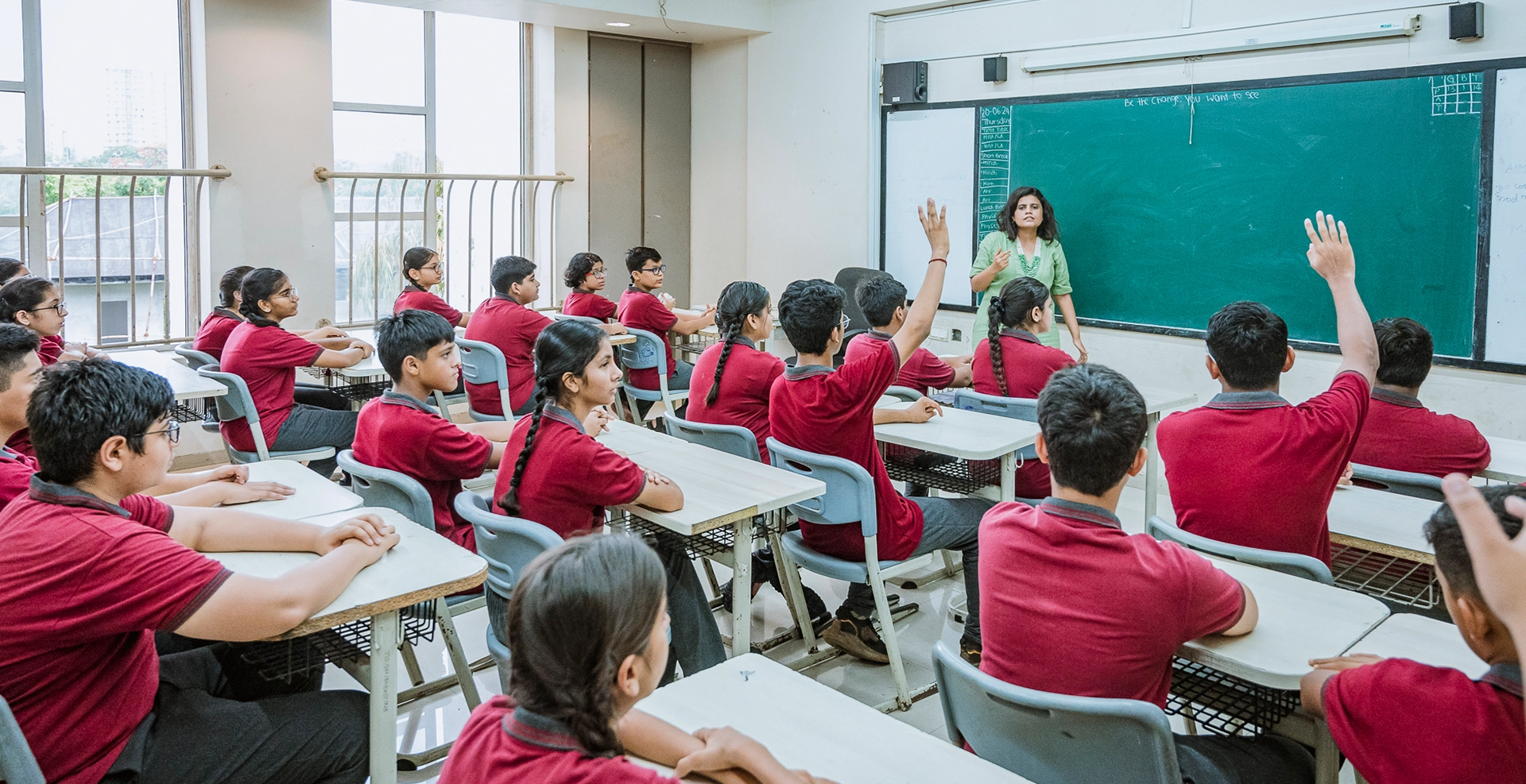
At The Somaiya School, the curriculum for Grades 6 to 10 follows the guidelines prescribed by CBSE. It is designed to provide a balanced academic framework that encourages conceptual understanding, analytical thinking, and personal growth. Aligned with the National Education Policy (NEP) 2020, our secondary curriculum equips students with the knowledge, skills, and values needed to navigate an evolving world.
Language
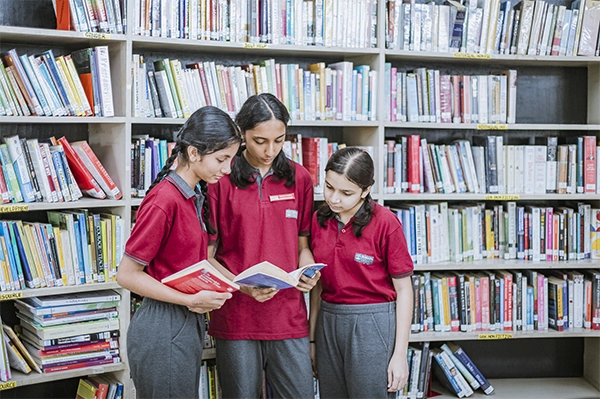
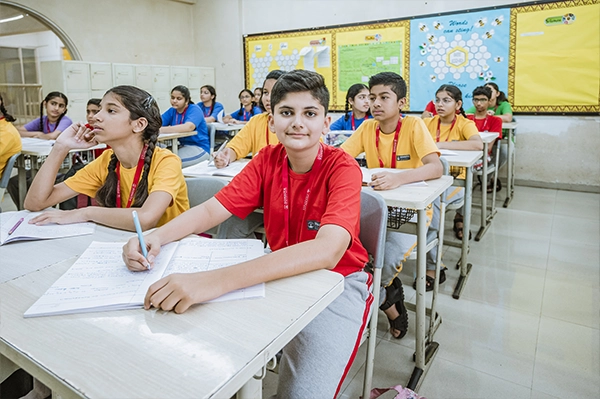
Students study English as their first language and choose a second language from Hindi or Marathi, based on their preference. The curriculum emphasizes the development of listening, speaking, reading, and writing skills, along with literary appreciation, grammar, and vocabulary. Language learning is enriched through debates, elocution, storytelling, and creative writing activities. Example of assignments
Mathematics
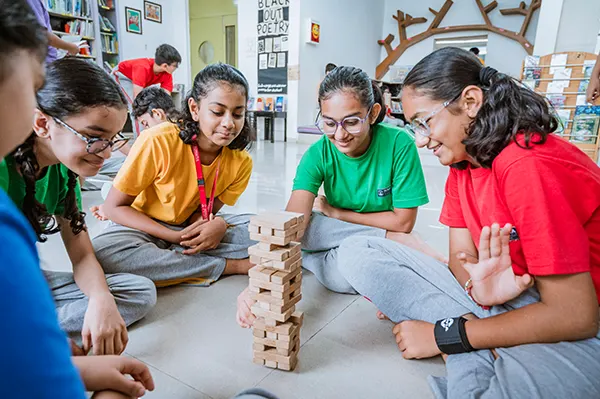
Mathematics instruction focuses on building strong foundational concepts in number systems, algebra, geometry, mensuration, data handling, and practical arithmetic. Emphasis is placed on problem-solving, logical reasoning, and application-based learning, with the integration of puzzles, projects, and real-life scenarios to deepen understanding.
Science
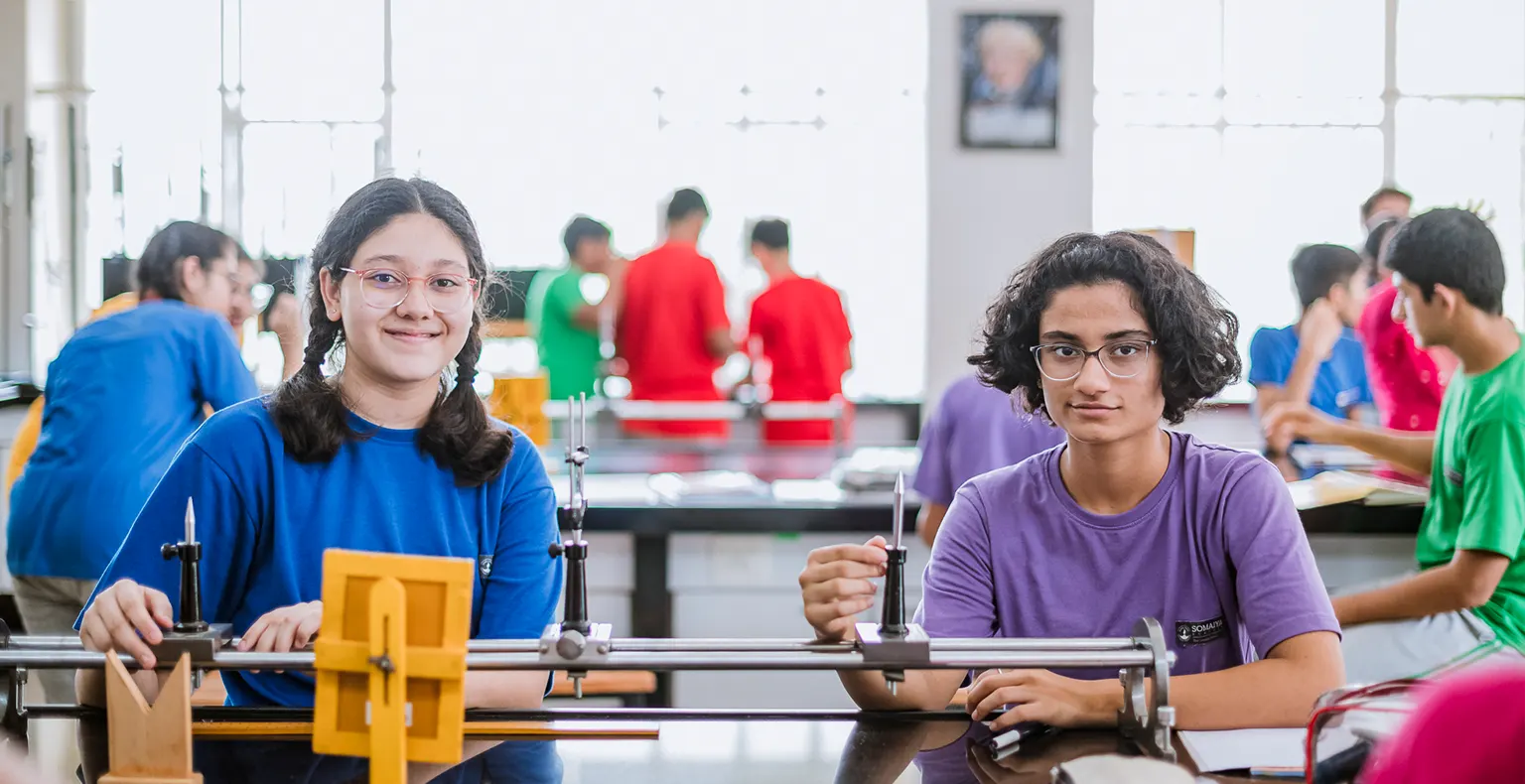
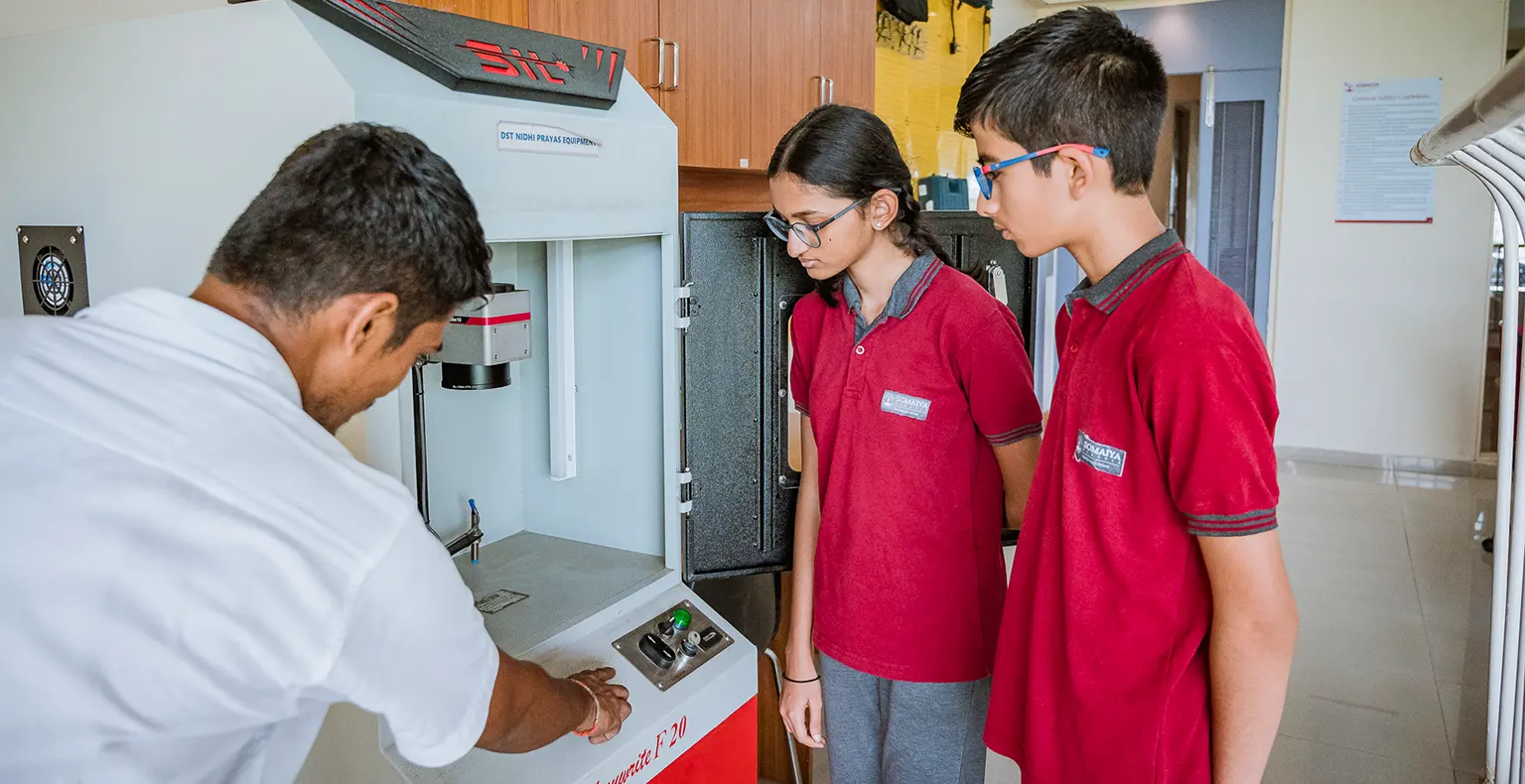
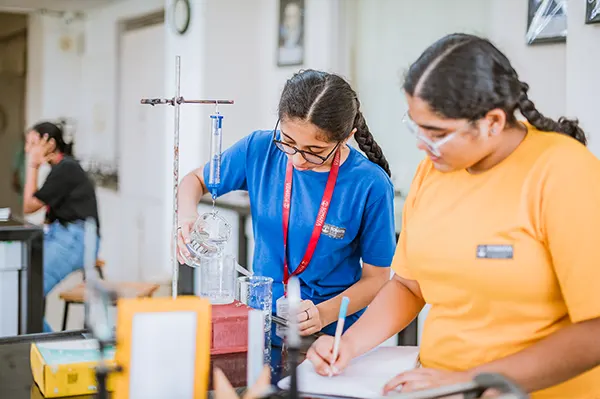
The Science curriculum is activity-oriented and inquiry-based, covering Physics, Chemistry, and Biology. It encourages students to explore scientific principles through hands-on activities, experiments, models, and observations, fostering critical thinking and a scientific temperament. Practical work in the science lab supports theoretical learning and helps students develop analytical skills.
Social Science
Social Science includes History, Geography, Political Science, and Economics. The subject is taught through an interdisciplinary lens, helping students understand human society, civic responsibility, environmental issues, and global interdependence. Classroom learning is enriched through projects, discussions, and connections to current events. – softboards
Information and Communication Technology (ICT)
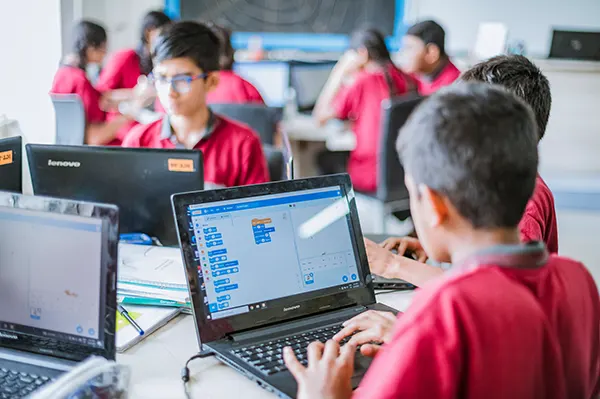
ICT is integrated into the curriculum to ensure digital literacy and responsible use of technology. Students learn basic programming, digital tools, internet safety, and productivity applications, empowering them to become effective users and creators in the digital world.
Co-Scholastic Areas of Learning
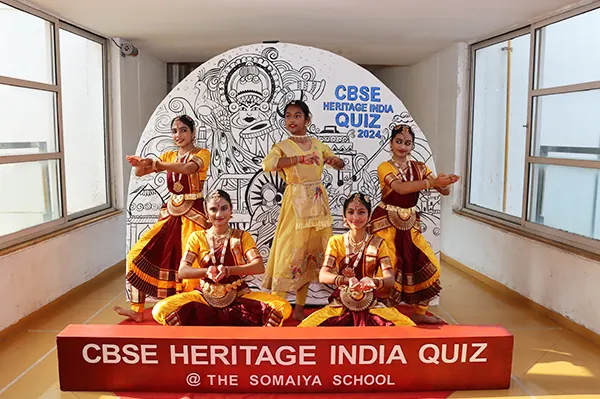
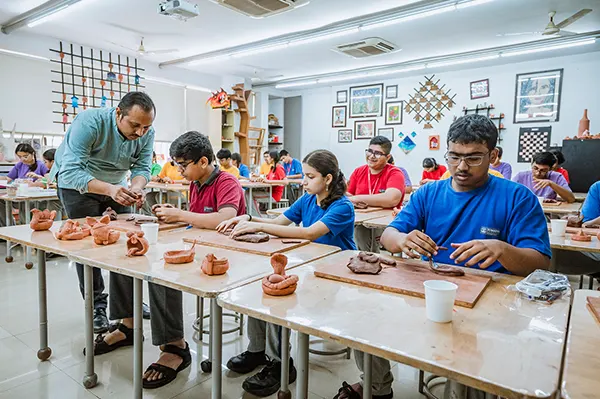
The curriculum gives equal importance to Art Education, Health and Physical Education (HPE), Music, and Performing Arts, ensuring holistic development. Students participate in a wide range of activities including visual art, Indian and Western music, Western dance, yoga, gymnastics, team sports, and dramatics. These experiences foster creativity, collaboration, discipline, and emotional expression.
Experiential Learning
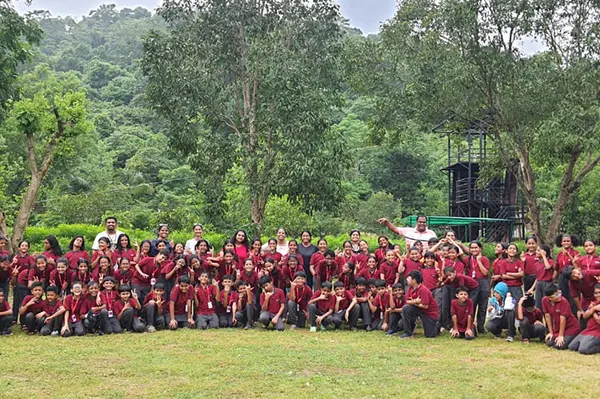
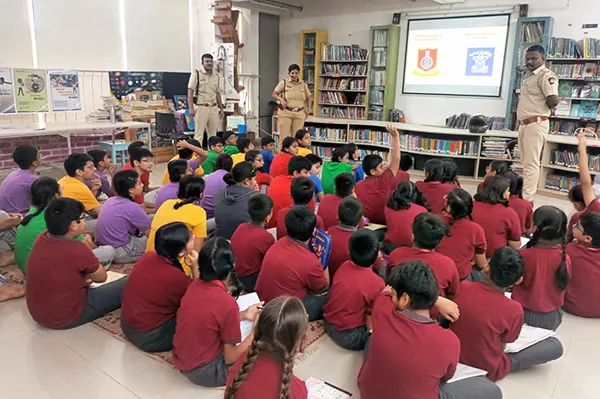
Experiential learning is embedded throughout the curriculum. Field trips, guest lectures by experts – in school and during field trips, exhibitions, project based learning, heritage visits, and community outreach projects help students connect classroom knowledge to real-world contexts. These experiences broaden perspectives, deepen understanding, and make learning relevant and meaningful.(Guest lectures from experts in school and during trips – eg. Monalisa spoke on temple architecture before a trip to Hampi, Visit to sewri fort before a trip to Sambhajinagar
Assessment
The focus of assessments in the secondary section is on evaluating both the scholastic and co-scholastic development of students through a balanced mix of formative and summative assessments, working towards academic excellence in CBSE Board exams. The new initiatives by CBSE are implemented in spirit.
The academic year is divided into two terms, with each term comprising a range of classroom-based assessments, periodic tests, subject enrichment activities, projects, and end-of-term examinations. Assessments are thoughtfully designed to go beyond rote memorization and encourage the application of knowledge, critical thinking, and real-world problem-solving.
Key Components of the Assessment System:
Assessment Structure for Grades 6–8:
Formative Assessments (FA):
FA1 and FA3: Activity-based assessments conducted on various predefined criteria.
FA2: A written test of 20 marks.
Summative Assessment (SA):
A pen-and-paper test of 80 marks. Conducted twice a year to evaluate cumulative understanding of concepts taught during the term.
Assessment Structure for Grades 9–10
Periodic Assessments (PA1, PA2, PA3):
Conducted as pen-and-paper tests.
Other Assessment Components:
Portfolio – A collection of student work reflecting progress and achievements.
Multiple Assessments (MA) – Includes quizzes, oral tests, class discussions, etc.
Subject Enrichment Activities – Skill-based activities specific to each subject (e.g., lab work, listening/speaking tasks, projects).
Periodic Assessments (PA): Regular evaluations that include written tests, oral assignments, quizzes, and concept-based tasks to track ongoing academic progress.
Portfolio : the best work of the student goes in their respective portfolios.
Multiple Assessment: various activities are conducted and taken in for the exam .
Subject Enrichment Activities: Focused tasks in each subject such as lab experiments, map work, speaking/listening activities, and mathematics lab work to assess practical application.
Summative Assessments: Conducted twice a year to evaluate cumulative understanding of concepts taught during the term.
Hidden Gems -
Secondary
01. Tech Bootcamps & Skill Challenges - A Launchpad for Young Innovators
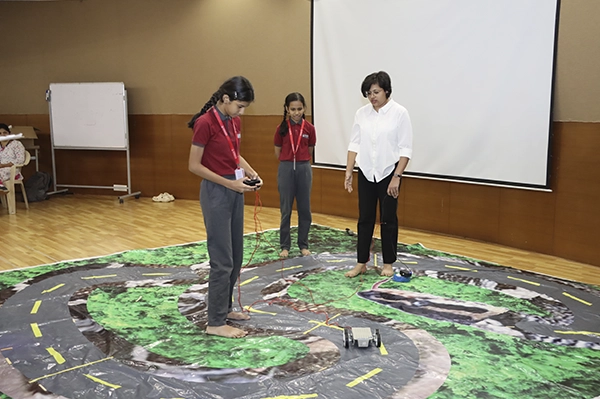
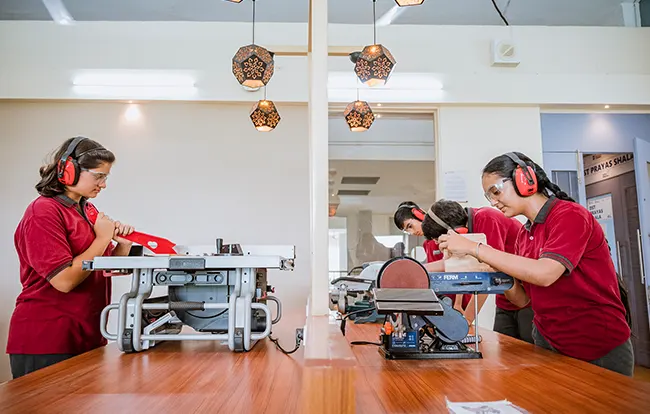
From building quadcopters to cracking robotics challenges, students from Grades 8–12 dive into national-level competitions with skill and spirit. These hands-on workshops fuel innovation, resilience, and leadership – shaping tomorrow’s changemakers.
02. The Food Forest - Growing Minds, One Seed at a Time
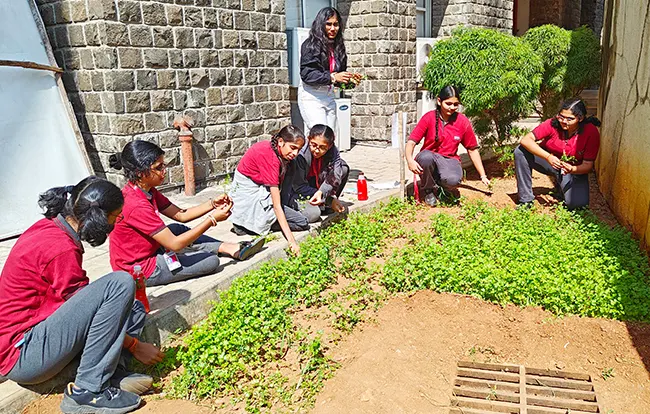
At The Somaiya School, students are not just learning about sustainability – they are living it. Tending to their own edible garden, they build hands-on gardening skills, observe biodiversity up close, and develop a lifelong bond with nature.
03. CRED Talk
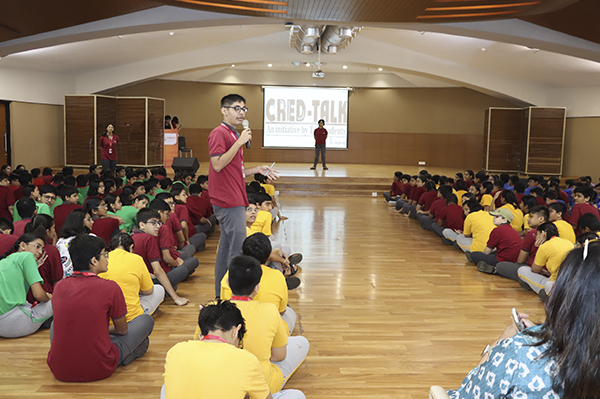
Students are actively participating in CRED Talk, confidently researching, preparing, and delivering creative presentations on topics that inspire them. This innovative platform encourages them to express themselves with enthusiasm and originality. CRED Talk truly brings out the Cool, Radical, Enthusiastic, and Divergent voices of the class
04. Project-Based Learning - Turning Journeys into Inquiry
For middle school, experiential learning trips become a springboard for deep inquiry. Students engage in collaborative, project-based work that connects lived experiences with academic concepts, transforming observations from their journeys into meaningful knowledge. At The Somaiya School, learning is not confined to the textbook – it is a dialogue with the world.
05. Strengthening School – Home Partnerships
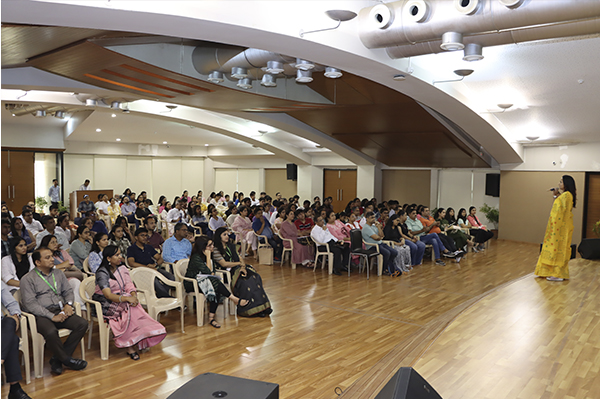
Through interactive workshops for parents on a variety of topics like exam stress, peer pressure, and child development, parents become active partners in their child’s journey – building a consistent circle of care between home and school.
06. Design thinking - From Idea to Impact
Students dive into real-world challenges through a structured yet imaginative process – researching, ideating, prototyping, and refining user-centred solutions. The subject builds empathy, innovation, and agency, helping learners think beyond the obvious and design with purpose.