Currently Empty: $0.00


The Primary Curriculum at The Somaiya School follows the guidelines set by the Central Board of Secondary Education (CBSE) and is designed to provide a strong academic foundation while nurturing creativity, curiosity, and critical thinking.
Aligned with National Education Policy (NEP) 2020 recommendations, the curriculum integrates core subjects such as English, Hindi, Mathematics, Environmental Studies (Grades 1 & 2), Science (Grades 3-5), Social Science (Grades 3-5) and ICT, along with Art, Music, Dance, Drama, Physical Education, and Life Skills. Emphasis is placed on conceptual understanding, experiential learning, and the development of 21st-century skills.
Learning is child-centered, interactive, and inclusive, encouraging inquiry, collaboration, and reflection. The curriculum also incorporates integrated and project-based learning opportunities, ensuring holistic growth and a seamless transition into middle school.

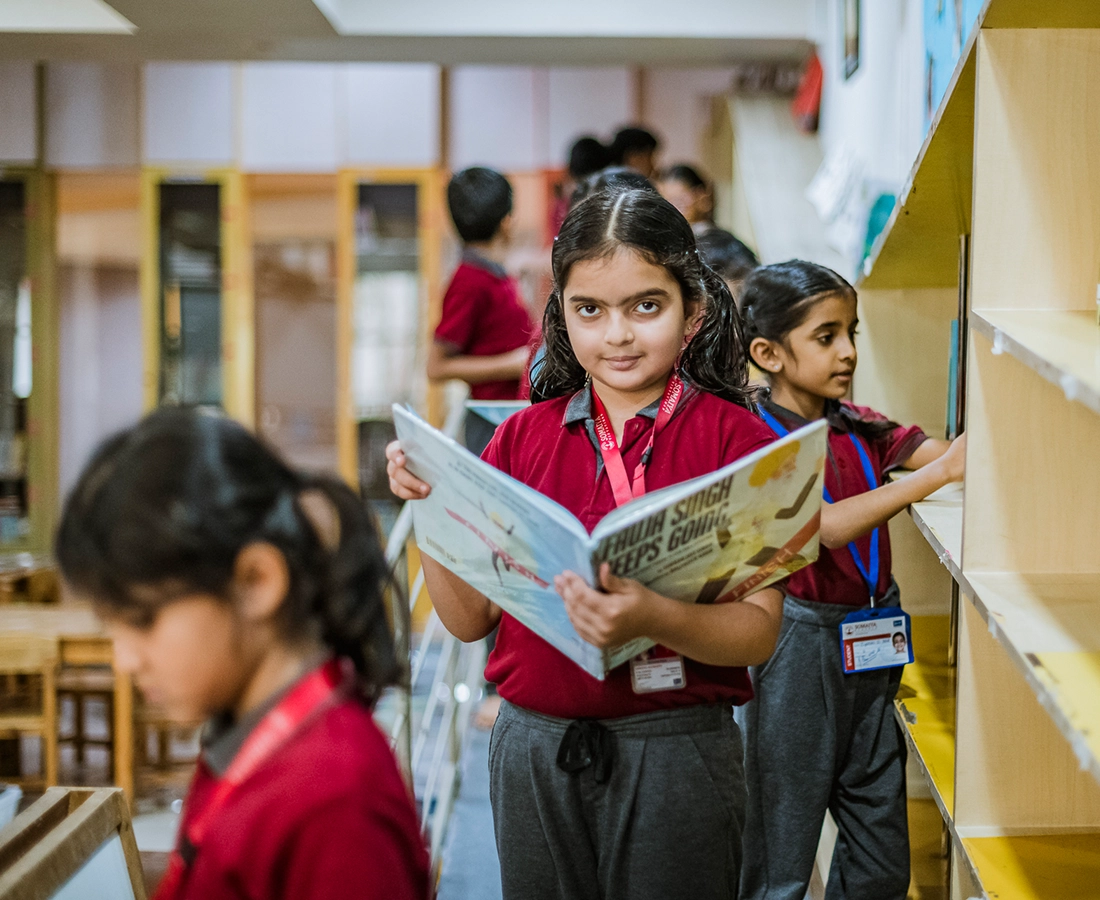
We believe that language is not only a tool for communication but also a gateway to culture, identity, and expression. Our language programme is designed to nurture multilingual proficiency and a deep appreciation for linguistic diversity.
In the primary years, we offer formal instruction in English, Hindi, and Marathi, in alignment with CBSE guidelines. These languages are part of the assessed curriculum and are taught with a focus on listening, speaking, reading, writing and comprehension skills, using interactive methodologies.
In addition, students are introduced to Sanskrit and various mother tongues through non-assessed, multisensory learning English, Hindi and a third language (a choice made between Sanskrit and Marathi) These sessions aim to build familiarity, cultural connection, and a love for languages, without the pressure of evaluation.
Our inclusive approach to language learning helps children develop confidence in self-expression, highlights respect for linguistic heritage, and equips them to engage in an increasingly interconnected world.
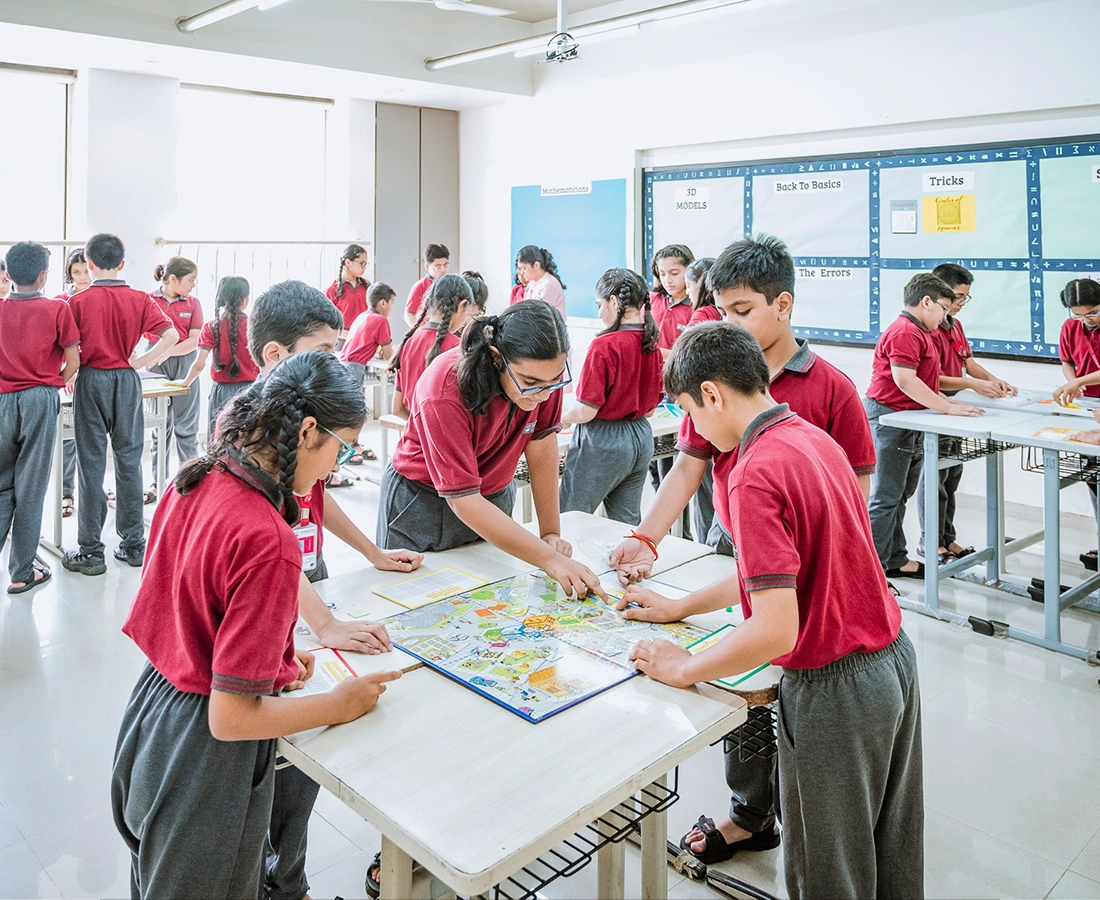
In the primary years, Mathematics is approached as a way of thinking, reasoning, and making sense of the world. The focus is on developing number sense, logical thinking, spatial understanding, measurement, patterns, and data handling. Concepts are introduced through concrete and visual experiences, using manipulatives, real-life examples, games, and interactive tools that make learning engaging and meaningful.
Our methodology encourages students to explore, question, and discover, moving beyond rote learning to understanding the ‘why’ behind mathematical ideas. Children are given regular opportunities to collaborate, apply strategies, and explain their thinking thereby fostering clarity and flexibility in finding a solution.
The Somaiya School also subscribes to the Shin Program and First In Math Program.
We aim to help students see Mathematics as a creative and empowering discipline, equipping them with the skills to think critically, solve problems, and approach challenges with confidence.
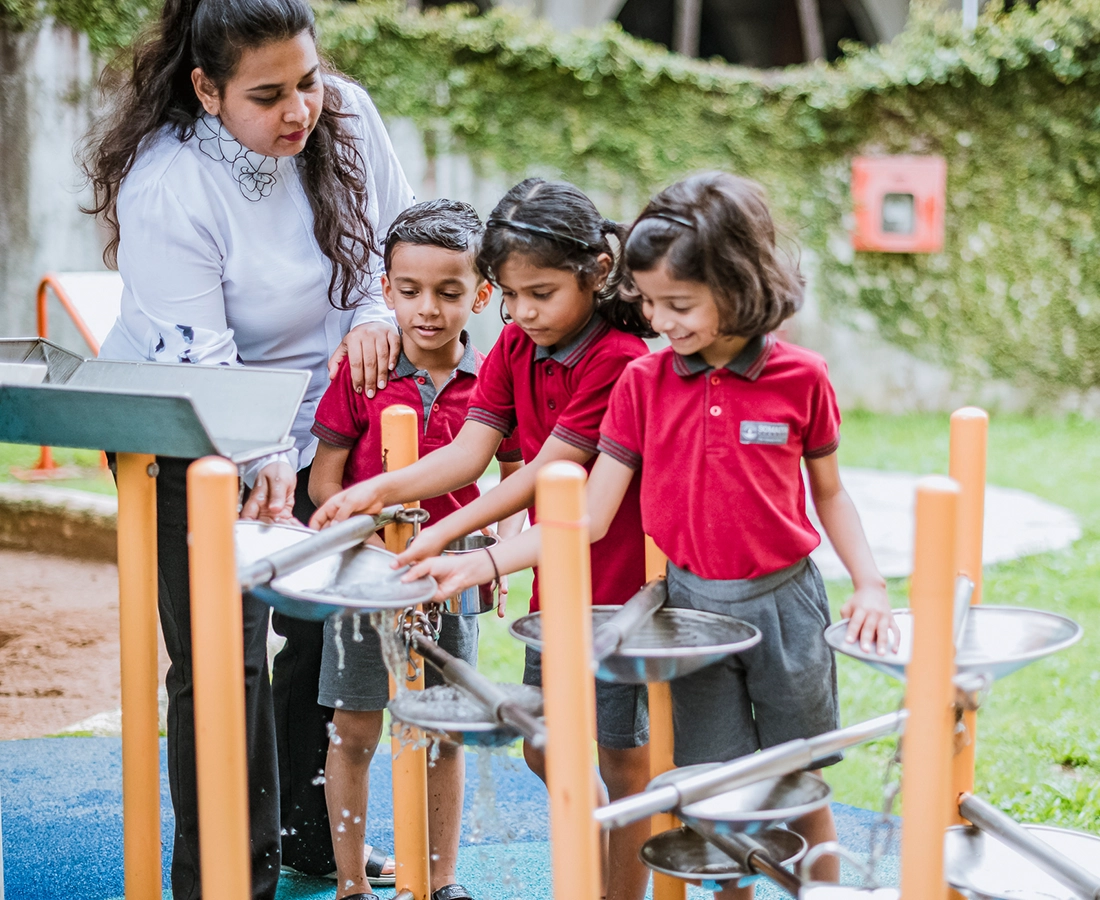
Our approach to teaching Environmental Studies (EVS), Science, and Social Science is grounded in curiosity, inquiry, and meaningful real-world connections. Our curriculum ensures age-appropriate progression across primary grades.
In Grades 1 and 2, children are introduced to Environmental Studies (EVS) through integrated themes from their everyday surroundings covering topics such as plants and animals, seasons, water, air, food, family, and neighbourhoods. Learning is exploratory – encouraging observation, questioning, and empathy toward the natural and social world.
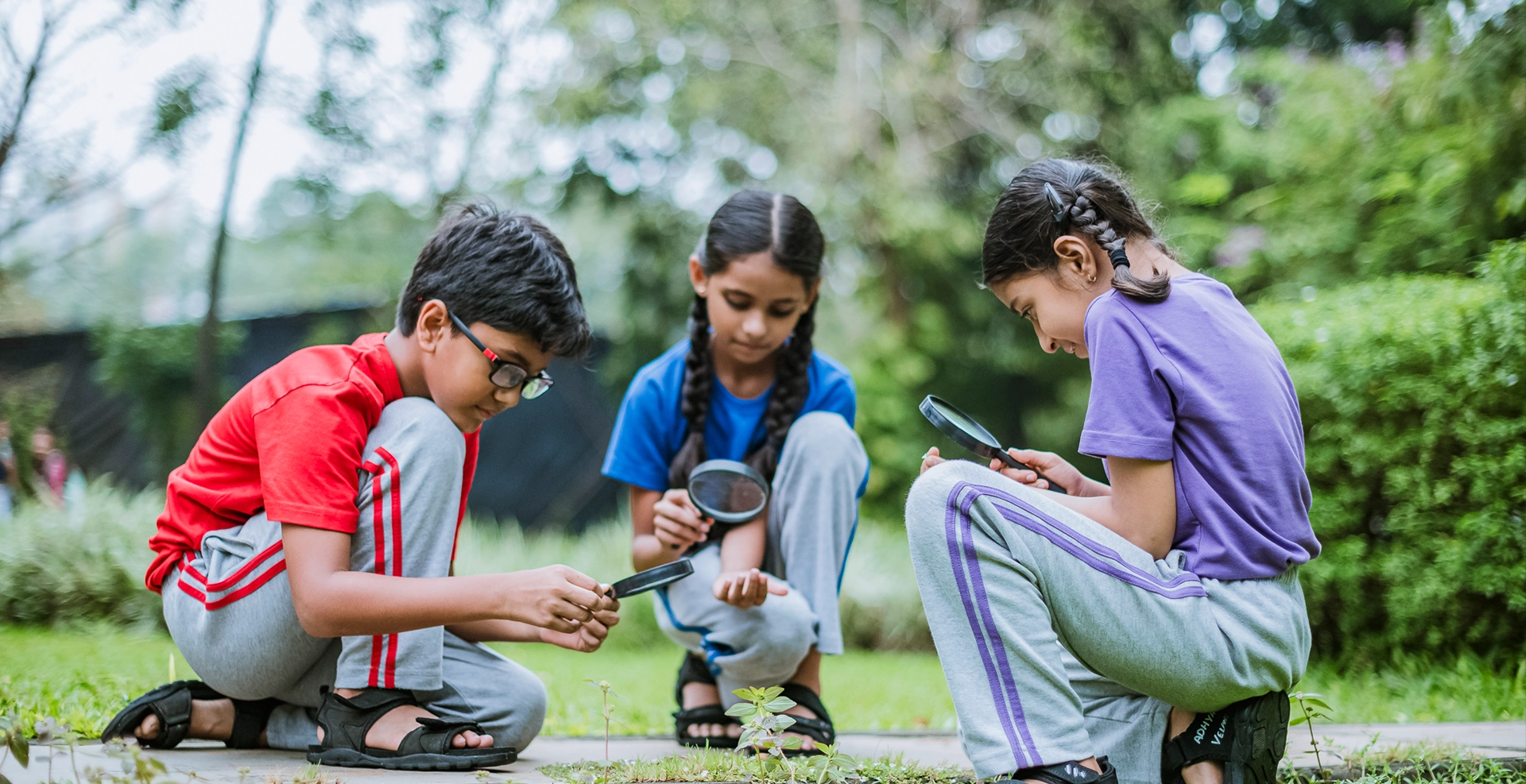
From Grade 3 onwards, students engage with Science and Social Science as distinct subjects. Science is taught through experiments, inquiry, and observation, helping children develop a scientific temperament and understanding of physical and biological phenomena. Social Science introduces students to geography, history and living in civil society, encouraging them to understand their place in the world and their responsibilities as citizens.
Across all primary grades, we integrate Project-Based Learning (PBL) to deepen conceptual understanding and build multidisciplinary connections. For example, a project on “Homes” might include drawing house plans (Math), writing descriptions (Language), learning about regional housing (Social Science), and exploring building materials (Science). This approach allows students to apply their learning across subjects and present their findings creatively.
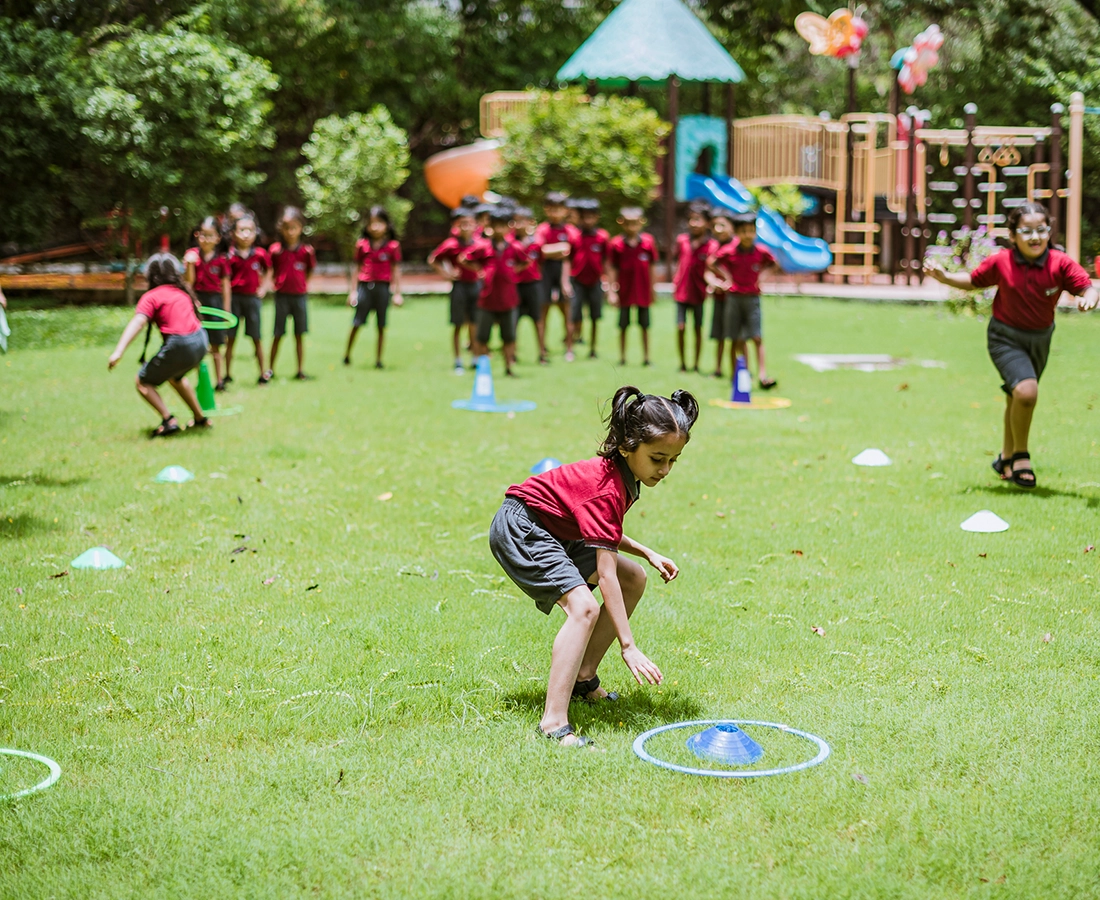
Health and Physical Education is a vital component of our primary curriculum and focuses on the holistic development of every child. We aim to nurture physical fitness, emotional well-being, and healthy lifestyle habits from an early age.
The programme includes a balanced mix of movement-based games, sports skills, agility drills, gymnastics, and yoga – all designed to enhance gross and fine motor development, endurance, balance, and teamwork.
Gymnastics is introduced in the primary years to develop body coordination, flexibility, posture, and core strength. It also supports concentration and self-discipline, essential for both physical and academic success.
Yoga is integrated into the weekly schedule to help children develop body awareness, breathing control, focus, and emotional regulation. Age-appropriate asanas and breathing techniques foster mindfulness, reduce stress, and improve overall well-being.
We also offer structured physical training in collaboration with the Somaiya Sports Academy (SSA) . Under the guidance of trained instructors, students participate in agility exercises, coordination drills, and structured fitness routines that build stamina, reflexes, and physical confidence.
Our inclusive and engaging physical education program is further supported by regular sports periods, co-curricular games, and an annual Sports Day – encouraging every child to participate, move with confidence, and enjoy being active.
Through this integrated approach, we aim to cultivate not only physical fitness but also a lifelong appreciation for health, discipline, and well-being
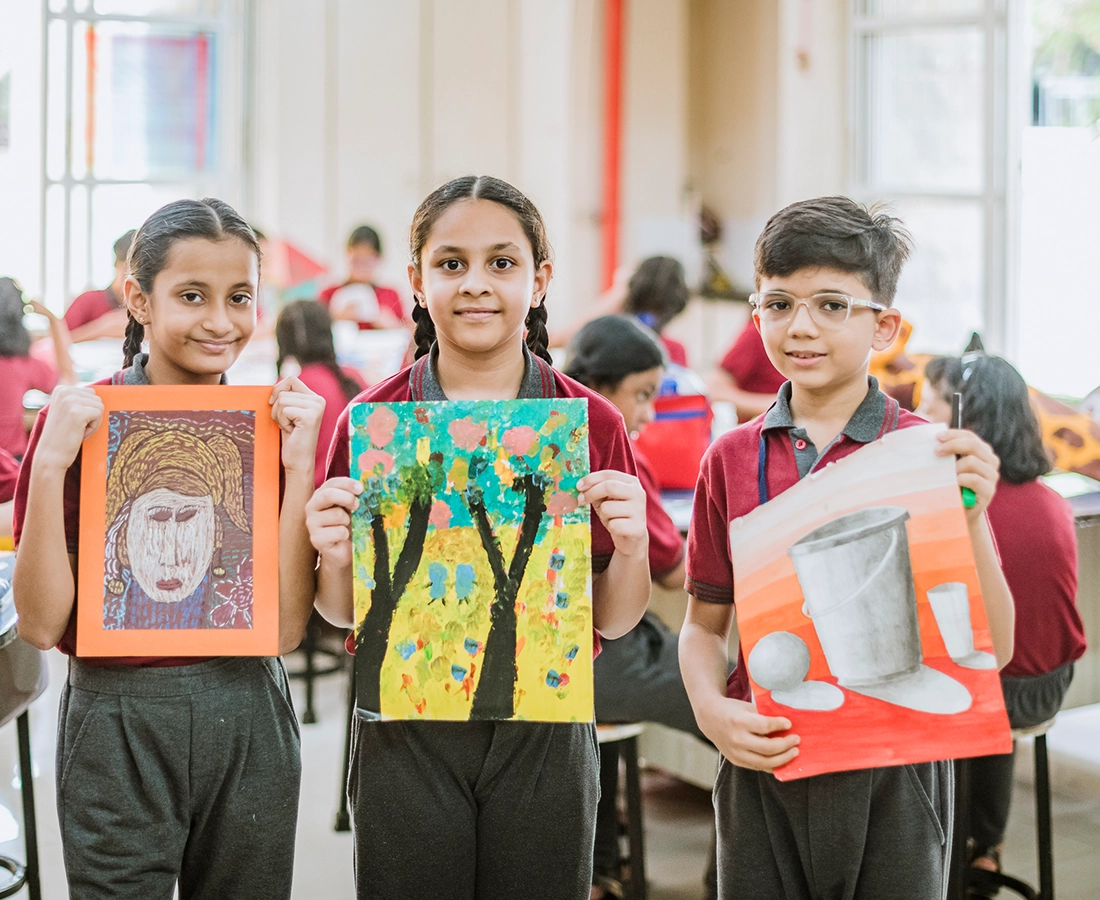
Through balanced and structured programmes, we aim to nurture imagination while developing fine motor skills, aesthetic awareness, and collaborative spirit. These disciplines provide children with joyful opportunities to explore, create, and connect with diverse cultures and traditions.
The Visual Arts curriculum introduces students to a wide range of materials and techniques, including drawing, painting, clay work, collage, and mixed media. Children explore art through both guided and open-ended activities, learning to express ideas, respond to their environment, and develop a sense of personal style. Art is often integrated with other subjects, allowing students to visually represent learning across the curriculum.
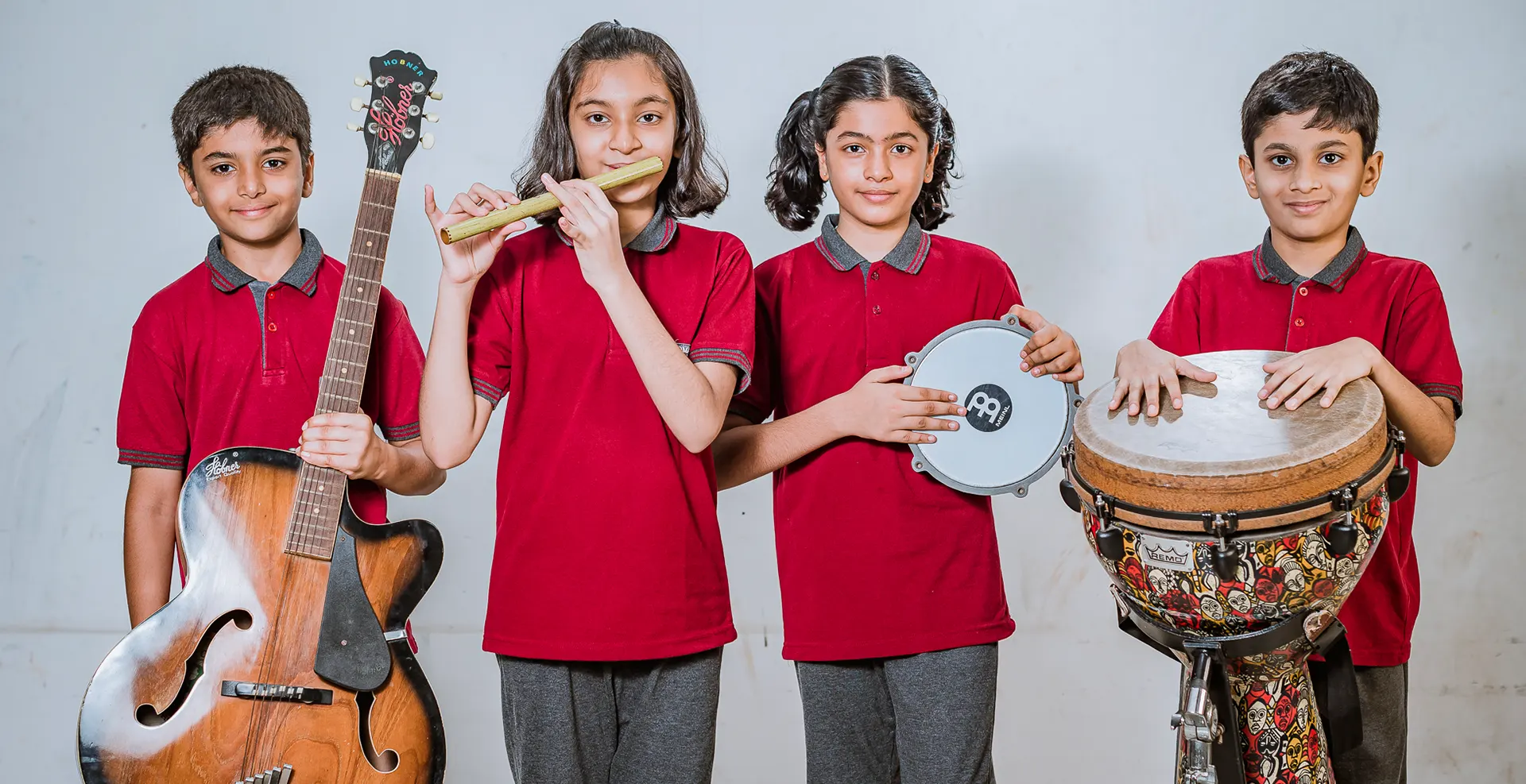
The Performing Arts curriculum includes music, dance, and drama, offering a holistic platform for expression and performance.
Through the Performing and Visual Arts Programmes, we aim to develop not only technical skill and artistic appreciation but also confidence, collaboration, and joy in the creative process.
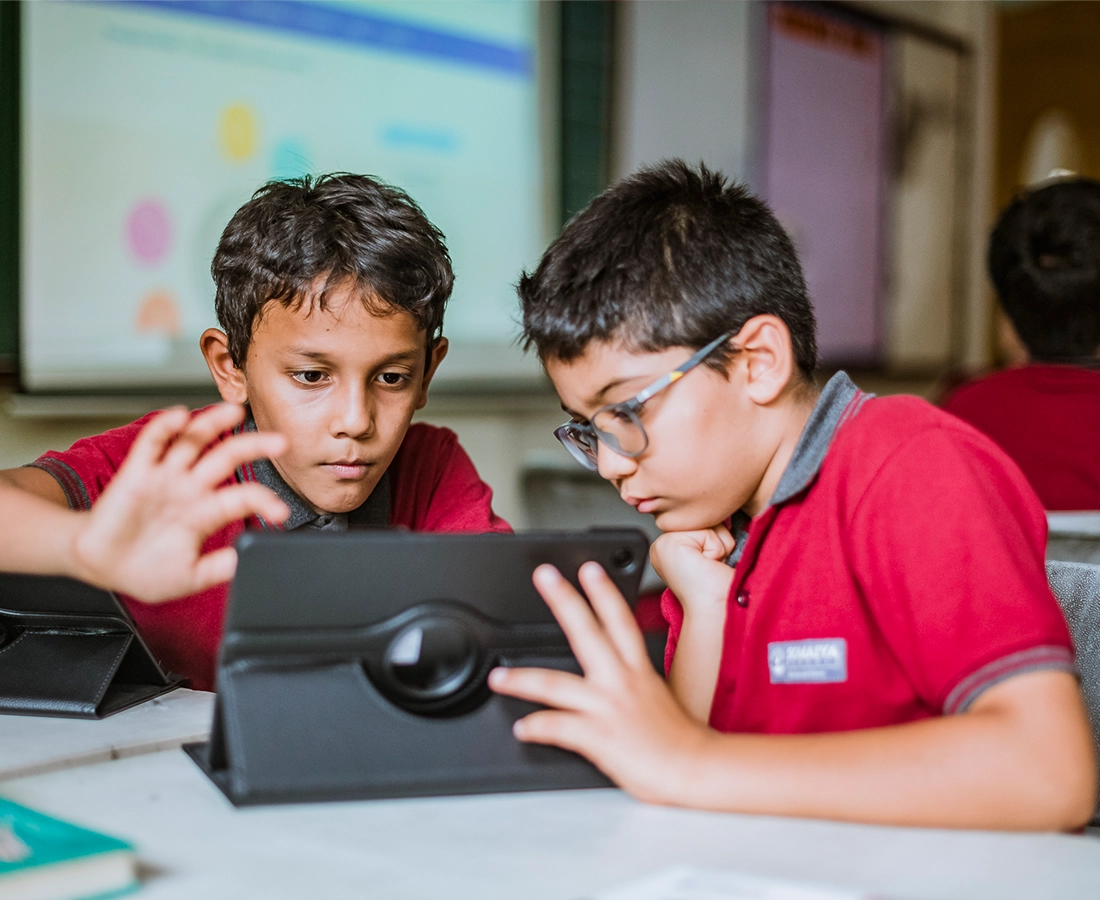
Our assessment approach for the primary section (Grades 1–5) is aligned with the latest CBSE guidelines and the National Education Policy (NEP) 2020. The focus is on making assessment holistic, learner-centric, and developmentally appropriate, encouraging students to understand and apply concepts rather than rely on rote memorization.
The academic year runs from April to March and is divided into two terms. We follow a Continuous and Comprehensive Evaluation (CCE) model that supports ongoing feedback, early identification of learning needs, and timely intervention.
Key Features:
Regular classroom-based assessments capture learning progress through observations, checklists, quizzes, creative tasks, discussions, and reflective exercises. These formative assessments are designed to be non-intrusive, child-friendly, and embedded within the daily learning experience.
Conducted at the end of each term, summative assessments evaluate students’ overall grasp of concepts and skills taught during the term. These assessments are age-appropriate, balanced across subjects, and focused on application-based and competency-driven questions.
Teachers maintain detailed portfolios and observation records to track individual growth across cognitive, social, emotional, and physical domains. Parent-teacher interactions are held regularly to discuss progress, strengths, and areas for support. Students receive feedback not only on academic understanding but also on skills such as collaboration, creativity, communication, and critical thinking, in line with the NEP’s emphasis on 21st-century skills
Our assessment framework is designed to celebrate learning, support continuous growth, and build a strong foundation for future academic success.
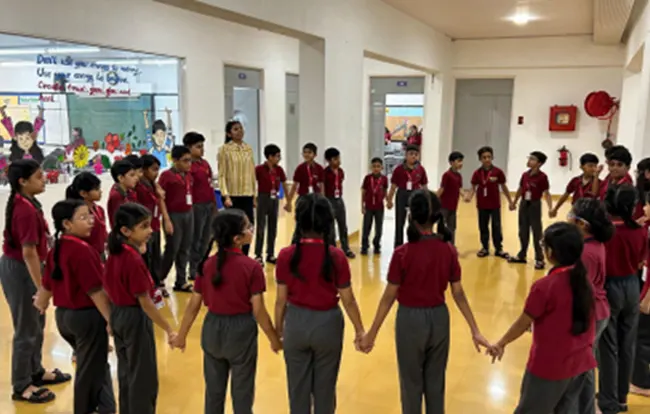
Quality Circle Time enables students to engage in reflective group circles that nurture emotional awareness and mutual respect. During this time, they practise social-emotional competencies like empathy, communication, and cooperation, as well as practical problem-solving and teamwork skills – contributing to a classroom culture that is rooted in kindness and inclusivity.
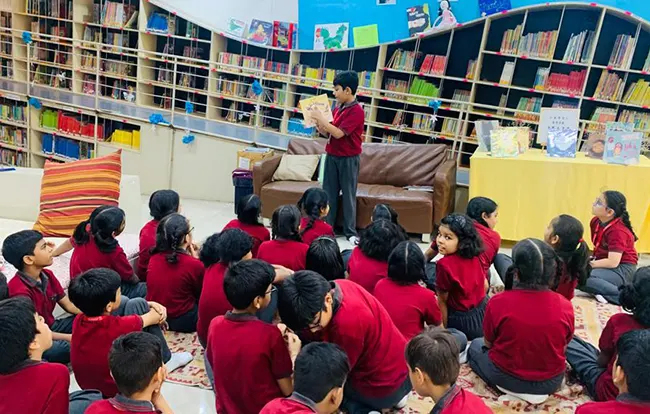
Our Book Talk sessions turn reading into a lively, reflective exchange of ideas. Students introduce books they have read – sharing about the characters and plots but leaving their audience curious for more. These sessions strengthen reading comprehension, communication, and confidence while cultivating a lasting love for literature.
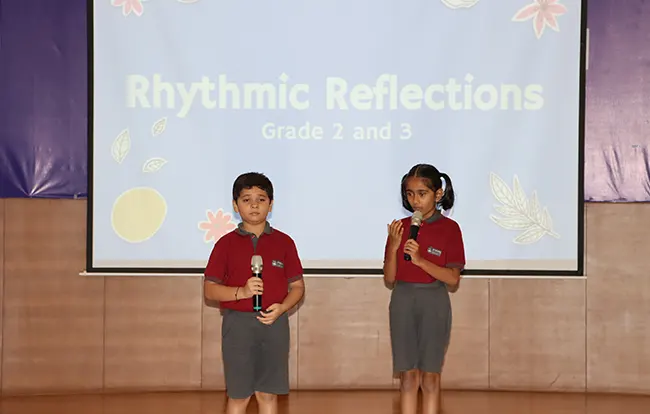
CRED Talk empowers students to speak their minds, explore ideas, and present topics that intrigue them. Through research and short presentations, they build confidence, critical thinking, and communication skills, embracing the Somaiya spirit of expressive, independent learning.
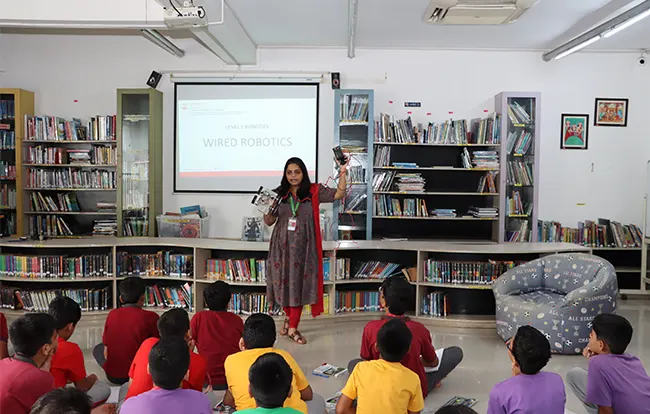
Our Robotics program introduces students to the exciting world of design, and innovation. This hands-on experience of constructing and programming basic robots encourages exploration, innovation, problem solving and develops the confidence to engage with emerging technologies – preparing them for the challenges of tomorrow.
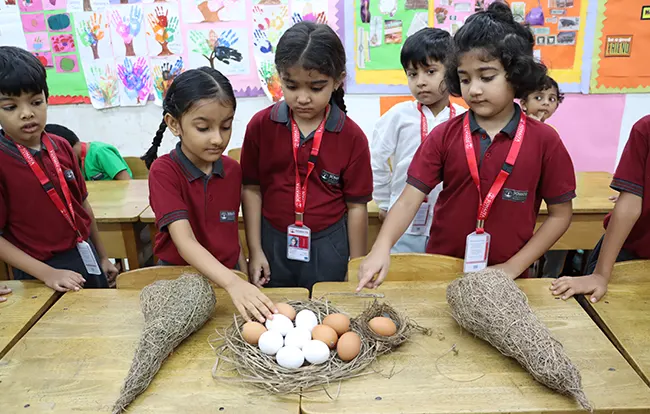
At Somaiya School, Project-Based Learning (PBL) encourages children to learn through exploration, inquiry, and creation. Instead of simply receiving information, students engage in thoughtfully designed projects where they question, research, build, and present their ideas with confidence.
Copyright 2026 Somaiya Vidyavihar. All Rights Reserved