Currently Empty: $0.00



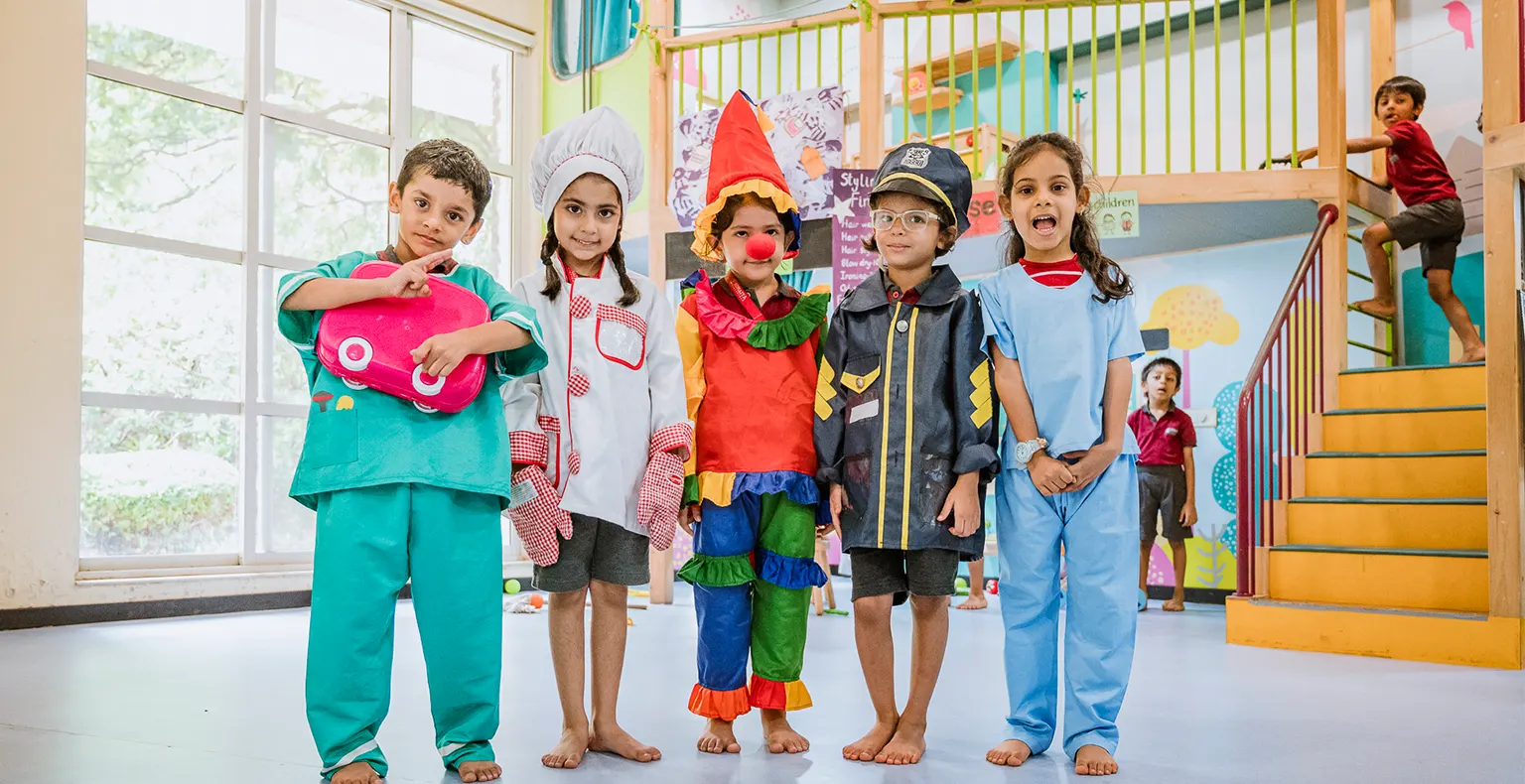
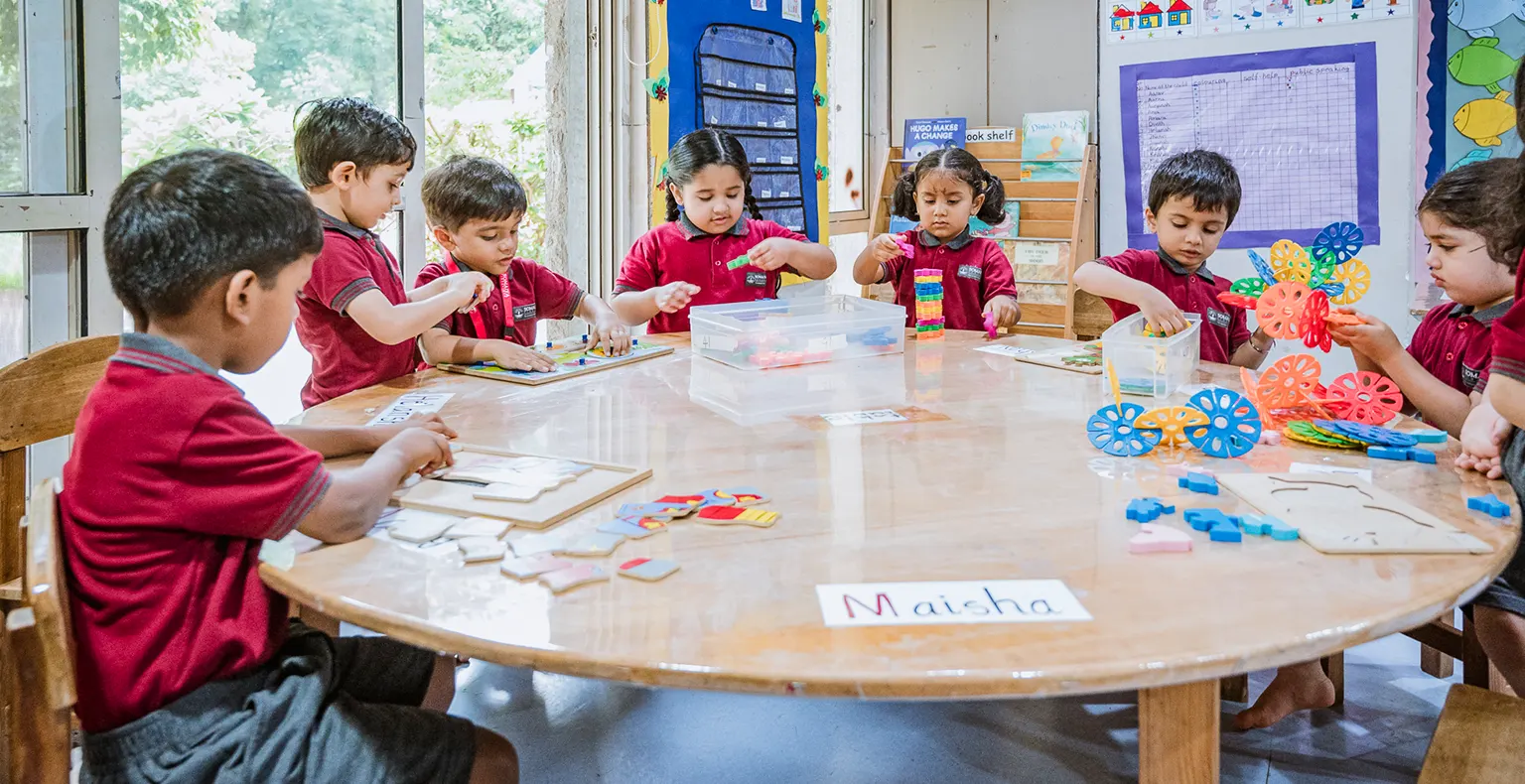
The pre-primary curriculum at The Somaiya School is geared to nurture the innate curiosity, imagination, and love for learning which children are born with. Based on developmentally appropriate practices, our curriculum emphasizes the child’s overall growth, encompassing their cognitive, social, emotional, physical development along with literacy skills.
In the early years, education is achieved through play, discovery, storytelling, and practical experiences. The learning program bridges early literacy and numeracy with self-expression, problem-solving, and relating to others. Themes are drawn from the world around, helping the students to make meaningful connections to their environment, culture, and community.
We seek to establish a caring, inclusive, and challenging learning environment that provides the foundation for lifelong learning. Emphasis is placed on values, respect for diversity, fostering independence and helping each child develop confidence, empathy, and a love for learning.

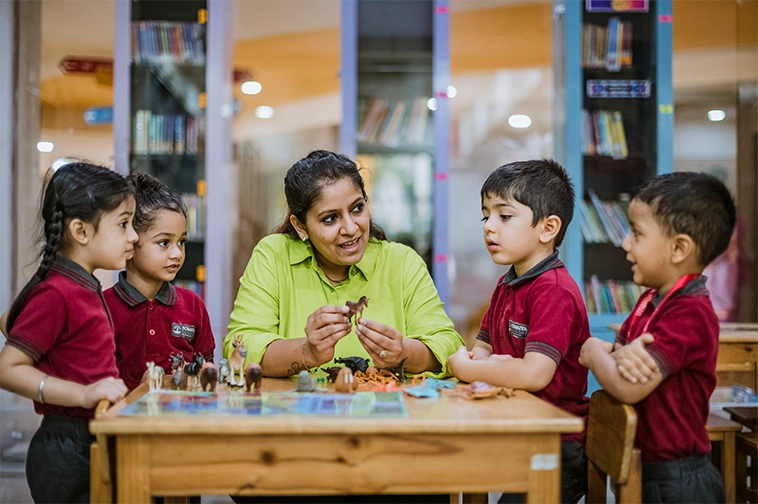
At The Somaiya School, our pre-primary methodology is grounded in the belief that how children learn is just as important as what they learn. We adopt a dynamic and integrated approach that supports the holistic development of every child, blending structured and unstructured experiences in a nurturing environment.
Learning through play and inquiry forms the core of our approach, allowing children to express themselves, ask questions, and engage deeply with the world around them. Curriculum in early years is theme -based. Learning takes place through collaborative and creative ways with a focus on hands-on experiences. We follow an integrated approach to learning, where concepts from various domains – language, numeracy, science, art, and life skills – are interwoven, helping children make meaningful connections and develop a deeper understanding of the world.
Our program strikes a balance between child-led exploration and teacher-directed instruction. Children are given the space to initiate their own learning, while teachers act as facilitators who guide, scaffold, and extend learning experiences. A strong sensory approach ensures that all five senses are engaged daily, helping children build focus, awareness, and early cognitive skills. We also follow a progression from concrete to semi-concrete to abstract learning, using tangible materials and real-life contexts to build foundational understanding before moving toward symbolic and conceptual thinking.
Children are introduced to multiple languages such as – Hindi, Sanskrit, and English in the formative years. Language development is cultivated through storytelling, read-alouds, dramatic play, and a print-rich environment that promotes expressive and receptive language skills. Music and movement are an integral part of the day, supporting physical coordination, rhythm, and joyful self-expression.
Our health and physical development program includes age-appropriate yoga, gymnastics, balance, and agility training. These sessions enhance physical strength, coordination, and overall well-being.
To complement in-class learning, children also participate in field trips that provide opportunities for experiential learning. These visits are carefully planned to connect with classroom themes and allow children to explore their environment, apply their learning in real-world settings and develop social awareness and independence.
Through this thoughtful and comprehensive methodology, we aim to nurture confident, curious, and compassionate learners – equipped with the skills, values, and mindset to thrive in a dynamic and interconnected world.
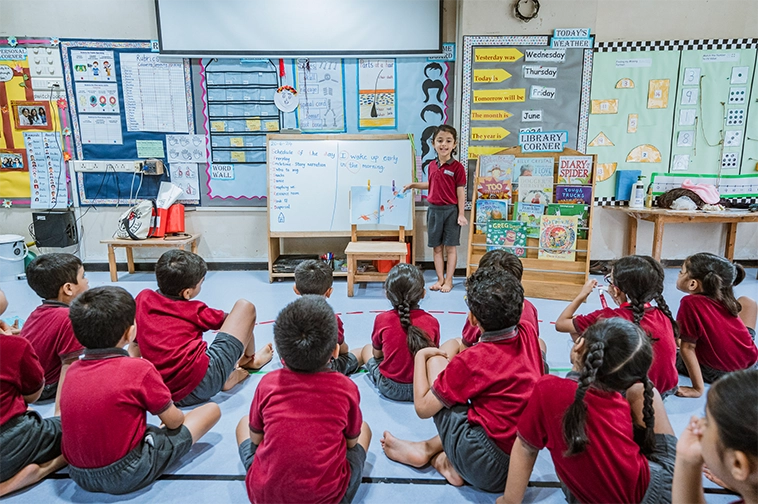
At The Somaiya School, the learning environment is ergonomically designed to support and extend the curriculum. Every element of the space is planned to foster exploration, independence, and meaningful engagement, enabling children to experience learning as a joyful, integrated process.
Our classrooms are organised into interest-based Learning Centers, encouraging children to explore different domains at their own pace. Visually engaging, interactive and educational bulletin boards display children’s work and anchor charts to build confidence, stimulate curiosity and reinforce learning. Each classroom is equipped with a projector and screen, supporting both visual and auditory learners and making multimedia learning an integral part of the day.
Materials are placed on open, labeled shelves to encourage independence, responsibility, and self-directed learning. Children are taught to access and return materials on their own, reinforcing spatial awareness and helping develop early mathematical and organisational concepts such as more/less, big/small, in/out, and same/different. Each child has a designated personal cubby, promoting ownership of their space and belongings.
To promote early literacy and a love for books, each classroom includes a well-stocked, open-access library, inviting children to browse and engage with literature throughout the day.
Our outdoor environment is designed to complement the indoor learning experience, providing numerous opportunities for gross motor development, imaginative play, and nature-based exploration. The outdoor space includes a sandpit, splash pool, garden, and a dedicated play area with child-safe, synthetic surfacing.
Experiences such as storytelling under the trees, painting in the open air, insect exploration, nature walks, sensory water walls, rain walk, mud puddle play outdoor games, and music and movement sessions foster a deep connection with the natural world while stimulating sensory and emotional development.
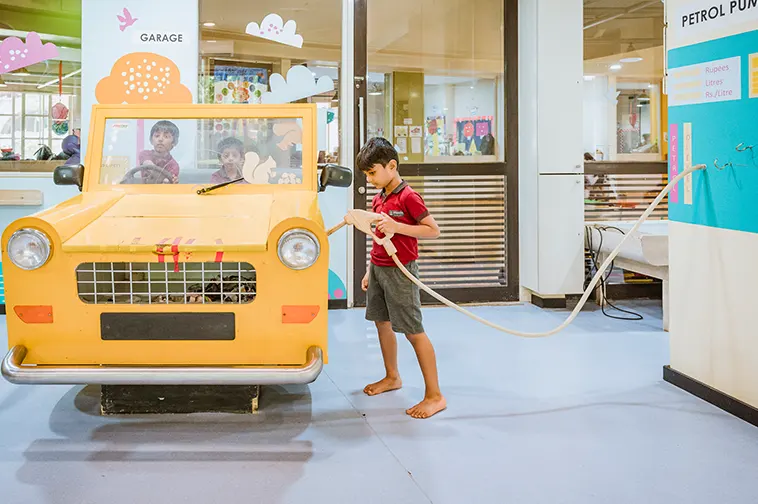
Our Resource Room is divided into thoughtfully designed interest areas, each stocked with age-appropriate and stimulating materials. These include:
These spaces offer children varied opportunities to engage in imaginative, collaborative, and exploratory play, supporting holistic development across cognitive, social, and emotional domains.
Our infrastructure is carefully designed with the comfort, safety, and developmental needs of young children in mind. Classrooms are spacious, well-ventilated, and child-friendly, allowing for movement and collaborative work. Safe, durable, and age-appropriate portable furniture ensures flexibility in classroom arrangements and optimal use of space for varied learning needs.
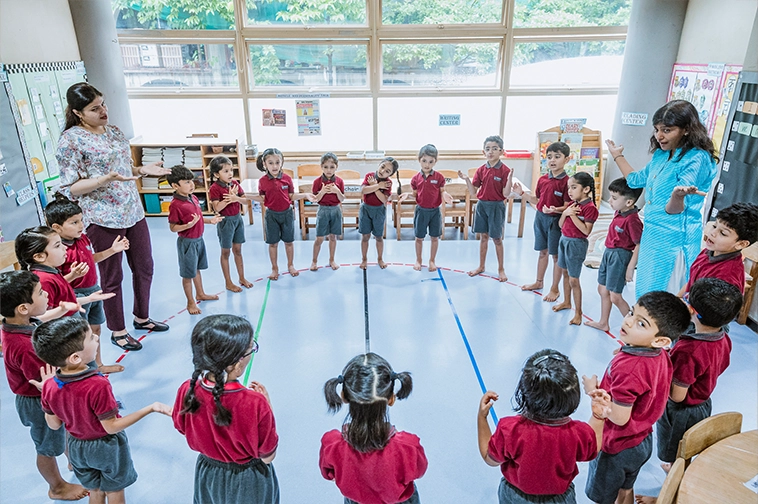
Our daily routine is thoughtfully structured to offer a balanced mix of experiences that support all areas of a child’s development. The framework for each day ensures consistency and rhythm, while also allowing flexibility for exploration and creativity.
A predictable routine provides young children with a sense of security and belonging. This familiarity encourages them to make independent choices, take thoughtful risks, and fully engage in the learning process.
Each day includes a variety of activities, designed to nurture curiosity, collaboration, and confidence. While the sequence and duration of each segment may vary, the core components of our daily schedule typically include:
These experiences are intentionally designed to foster language development, fine and gross motor skills, social-emotional growth, and imaginative thinking.
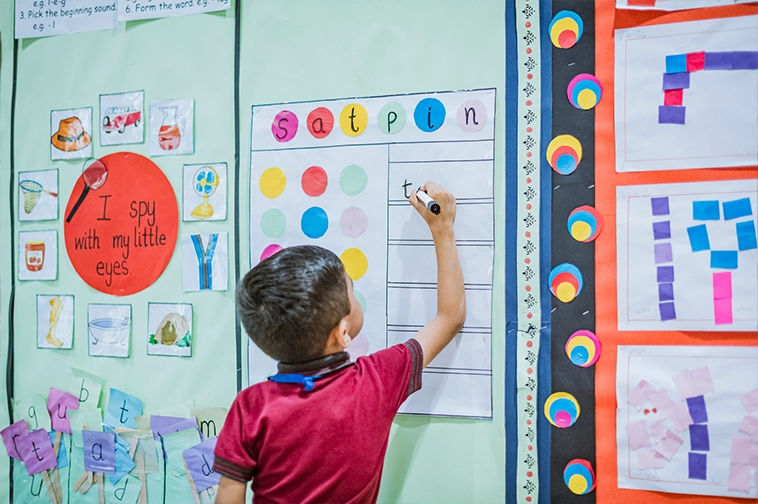
At The Somaiya School, assessment is an ongoing, integrated process that supports each child’s individual learning journey. Our approach is developmentally appropriate, reflective, and aligned with best practices in early childhood education.
Teachers engage in daily observations, using these insights to plan meaningful learning experiences tailored to each child’s interests, strengths, and pace of development. These observation records are systematically maintained over a three-year period, offering a comprehensive view of each child’s growth across domains – cognitive, affective and psycho-motor.
We believe in building strong partnerships with families. Interaction With Parents (IWPs) scheduled twice in each term ensures transparent communication about every child’s progress, areas of focus, and achievements. In addition, we provide detailed progress reports that outline developmental milestones and learning across cognitive, social, emotional, and physical domains.
Each child’s unique learning journey is documented through a personal portfolio, which includes:
Instruction is carefully differentiated to meet individual readiness levels, with teachers offering targeted support or extension opportunities to ensure that each child is both supported and challenged at the right level.
Our assessment philosophy values growth, encourages reflection, and ensures that learning remains purposeful, responsive, and child-centered.
At The Somaiya School, learning is a journey of observation and wonder. A walk, a visit, a question – every experience becomes a story of curiosity and critical thinking.
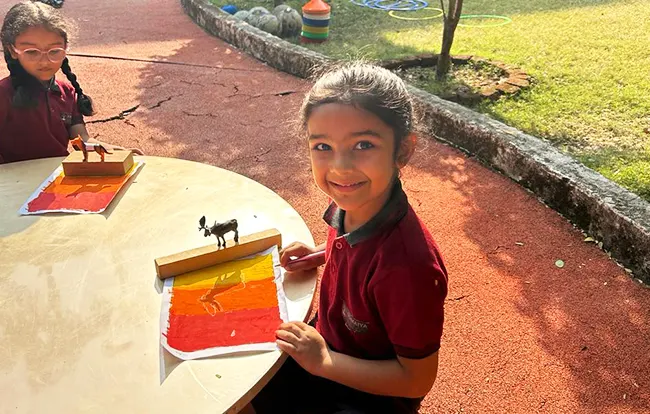
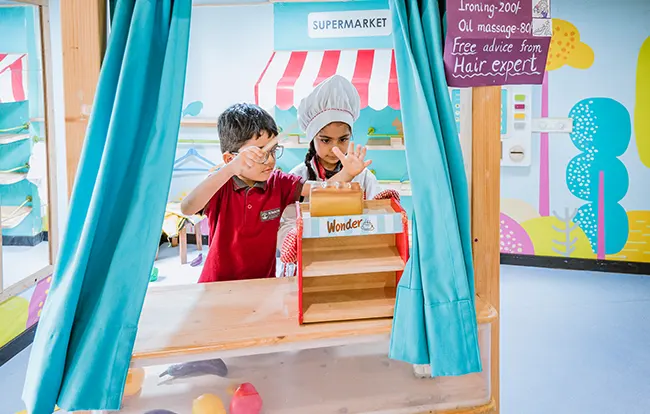
Play is purposeful where children navigate real-world scenarios through role play. In this immersive setting, curiosity blooms, choices spark learning, and imagination flourishes.
From grandparents spinning tales to parents running game stalls or joining classroom dramatics, our school community grows stronger when families join the learning journey. Their presence makes the school day more joyful.
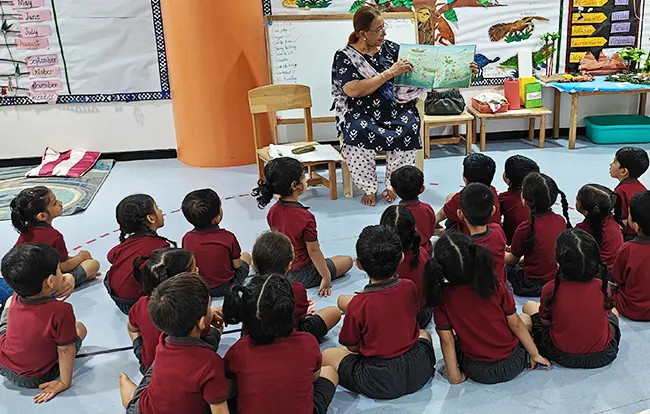
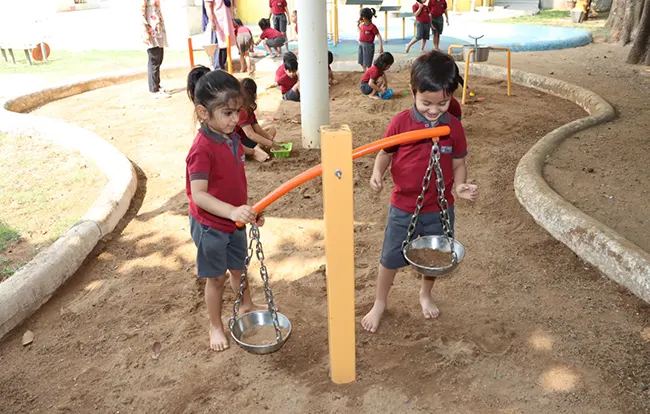
Students’ minds come alive when their hands, eyes, ears, and hearts are engaged. With every touch, sound, and smell – they are making meaning. Active, sensory-rich learning transforms classrooms into living laboratories of curiosity
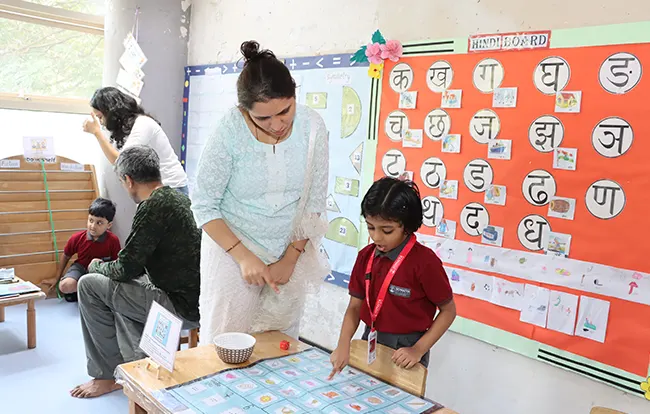
Through Student-Led Conferences (SLC), students take centre stage in reflecting
on their progress, setting goals, and showcasing their work to families. The process nurtures core life skills like independence, accountability, leadership, and the confidence to speak for oneself
Copyright 2026 Somaiya Vidyavihar. All Rights Reserved